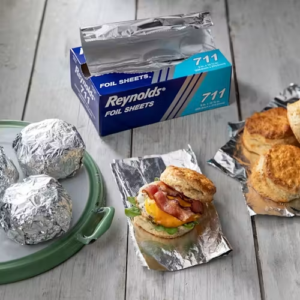

Papel de aluminio Es un producto de aluminio metálico sometido a un proceso de transformación profunda. Se trata de un producto de aluminio de espesor relativamente fino que se obtiene mediante el laminado de chapas de aleación de aluminio. El uso del papel de aluminio se remonta a finales del siglo XIX y principios del siglo XX. El proceso de desarrollo está marcado por la innovación tecnológica y la continua expansión de las aplicaciones en el mercado, lo que también permite que los tipos de papel de aluminio y las especificaciones de los productos ofrezcan una gama más amplia de opciones.
En el futuro, la demanda mundial de envases sostenibles seguirá creciendo. Los consumidores quieren reducir el uso del plástico y los minoristas exigen envases reciclables. Sus clientes necesitan soluciones que sean a la vez respetuosas con el medio ambiente y prácticas. El papel de aluminio cumple a la perfección todos estos requisitos. Sin embargo, la procedencia del papel de aluminio es fundamental, y China se ha convertido en la fuente preferida de papel de aluminio fiable, de gran volumen y personalizable para aplicaciones en contacto con alimentos. Zhengzhou ChiFeng Tech Industrial S.L...., como uno de los fabricantes de papel de aluminio con mejor reputación de China, es un socio en el que puedes confiar y por el que puedes apostar.
La historia del papel de aluminio

-
¿Quién inventó el papel de aluminio y cuándo?
El papel de aluminio se sigue utilizando hoy en día y ha pasado por un largo proceso de desarrollo. La invención del papel de aluminio se remonta ya a 1907, cuando el suizo Schimmel inventó el primer papel de aluminio. En aquella época, martillaba el aluminio hasta convertirlo en láminas finas y, a continuación, estiraba dichas láminas mediante una máquina de rodillos para fabricar finalmente el papel de aluminio. Esta lámina, de un grosor relativamente reducido, presenta características como la ligereza, la impermeabilidad y el aislamiento del oxígeno, por lo que pronto se generalizó su uso en el envasado de alimentos y otros ámbitos. Posteriormente, Estados Unidos también comenzó a producir papel de aluminio en 1913, por lo que este material se desarrolló rápidamente en un breve periodo de tiempo a principios del siglo XX.
A lo largo de su historia, los transformadores, los propietarios de marcas, los minoristas y los consumidores finales se han beneficiado de las propiedades de barrera únicas del papel de aluminio, que bloquean por completo la luz, la humedad y los aromas. Hoy en día se utiliza en todos los mercados imaginables, desde el de la alimentación y las bebidas hasta el farmacéutico. Entre sus aplicaciones se incluyen envases asépticos de cartón para bebidas, sobres, bolsas, tapas, envoltorios, envases tipo blíster y en tiras, recipientes de papel de aluminio y mucho más. Y en el horizonte se vislumbran aún más mercados y opciones eficientes en el uso de los recursos. Entre ellas se encuentran los recipientes aptos para microondas, que están ganando terreno en toda Europa, y aplicaciones fascinantes y técnicamente innovadoras para los papeles de aluminio farmacéuticos.
-
1910
Robert Victor Neher registró una patente para el proceso de laminación continua y abrió la primera planta de laminación de aluminio en Kreuzlingen, Suiza.
-
1911
La empresa Tobler, con sede en Berna, comenzó a envolver sus tabletas de chocolate en papel de aluminio, incluida la exclusiva tableta triangular Toblerone.
-
1912

Maggi utilizaba papel de aluminio para envasar sopas y cubitos de caldo.
-
Años 20

La influencia del papel de aluminio como material de envasado de éxito en Alemania creció lo suficiente como para abrirse paso de verdad en el sector lácteo, uno de los sectores más importantes de la economía alemana. Además, el papel de aluminio para uso doméstico se había introducido con éxito en Estados Unidos.
-
Años 30
El papel de aluminio conquistó por completo el mercado del envasado de la mantequilla y el queso. En aquel momento, un analista del sector escribió: «Más que en cualquier otro sector, el papel de aluminio mantiene frescos durante más tiempo los productos altamente sensibles, especialmente la mantequilla y el queso. Es una ayuda inigualable e indispensable en la lucha contra el deterioro». Además, el sector europeo del papel de aluminio comenzó a producir rollos de papel de aluminio para uso doméstico, ya fuera en forma de rollos para cortar a medida o como hojas sueltas en bolsas.
-
1937

El papel de aluminio se propuso por primera vez como material de envasado para la mantequilla en el Congreso Mundial de Productos Lácteos celebrado en Berlín. Los resultados de los estudios revelaron que el papel de aluminio permitía que la mantequilla se mantuviera fresca entre dos y tres meses más que con los materiales utilizados anteriormente.
-
1948
En Europa, los primeros envases alimentarios de papel de aluminio se utilizaron para productos de panadería que salían al mercado, a los que pronto siguieron otros muchos productos alimenticios.
-
1954
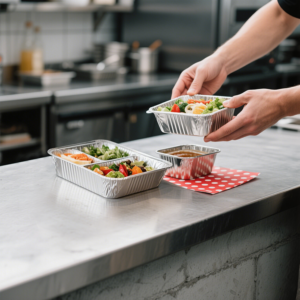
La «cena de televisión», precursora de los platos preparados actuales, se creó en Estados Unidos. Envasada en bandejas de aluminio con compartimentos, la idea no tardó en extenderse a Europa. Pero no solo se benefició el envasado para el consumo: el papel de aluminio semirrígido también se utilizaba para aplicaciones técnicas, como productos industriales entre los que se incluían grasas, ceras y compuestos adhesivos.
-
década de los 60

Se utilizó una fina lámina de aluminio junto con papel y polietileno para crear un laminado destinado a envases de cartón asépticos (TetraBrik). Concebido originalmente para su uso con leche UHT, el envase de cartón laminado con aluminio se ha consolidado actualmente en aplicaciones que incluyen zumos de frutas, sopas, bebidas de yogur y mucho más. Otro éxito de la década de 1960 fue el tubo laminado de papel de aluminio, compuesto por plástico, papel y papel de aluminio, que conquistó los mercados de productos como la pasta de dientes, las cremas cosméticas y los ungüentos farmacéuticos.
-
1974
La creación de la Asociación Europea del Papel de Aluminio contribuyó en gran medida al crecimiento de este sector, ya que ha desempeñado un papel fundamental a la hora de difundir el mensaje a un amplio público y de consolidar su éxito en el siglo XXI.
-
1978
Se llevó a cabo el primer uso a gran escala de un laminado de aluminio y plástico en una conocida pastilla efervescente para el dolor de cabeza.
-
los años 80
Los envases blíster empezaban a introducirse a gran escala.
-
Años 90
El papel de aluminio se impuso como un material innovador para casi todas las aplicaciones de envasado, y expresiones como «sellado con papel de aluminio para mantener la frescura» se convirtieron en algo habitual en los envases de marca. El papel de aluminio también fue el artífice del crecimiento de un nuevo mercado de envases de comida «gourmet» para mascotas de fácil apertura.


-
Años 2000
La eficiencia en el uso de los recursos y unas opciones aún más prácticas para el consumidor eran los principales objetivos en el caso del papel de aluminio, al igual que lo eran para todos los sectores de materiales, los transformadores, los propietarios de marcas, los minoristas y los consumidores finales.