
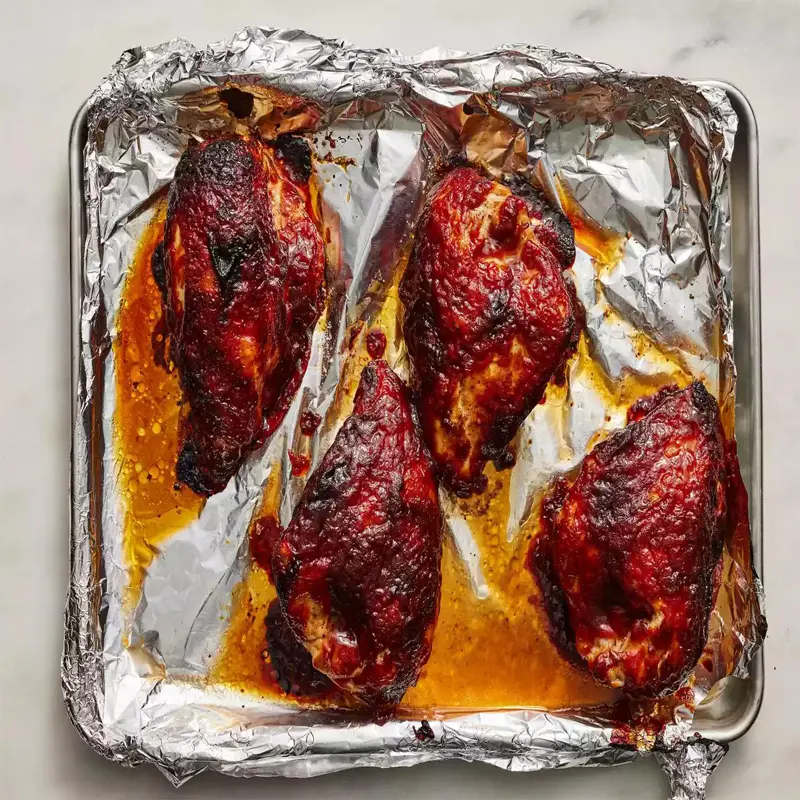
1. Is Cooking with Aluminum Foil Actually Safe?
Aluminum foil is widely used in home kitchens, restaurants, catering services, and food processing facilities. From roasting chicken and grilling vegetables to wrapping sandwiches and packaging takeaway meals, it provides a convenient way to protect food, retain moisture, and simplify preparation.
However, a common question continues to attract attention: Is cooking with aluminum foil safe, or can aluminum migrate into food during heating?
The answer depends on how the foil is used and the type of food it contacts.
Food-grade aluminum foil is generally suitable for normal cooking and food packaging applications when used according to the manufacturer’s instructions. However, acidic or highly salty foods can increase aluminum migration, particularly during prolonged heating or storage.
The German Federal Institute for Risk Assessment (BfR) advises consumers to avoid direct contact between uncoated aluminum foil and acidic or salty foods. Examples include tomatoes, citrus fruits, vinegar-based marinades, and heavily salted dishes. Source: BfR.
This distinction is important for both consumers and businesses sourcing aluminum foil products. Food safety depends not only on the material itself but also on alloy selection, manufacturing quality, product design, and the intended conditions of use.
2. How Is Aluminum Foil Manufactured?

Modern aluminum foil manufacturing is a highly controlled industrial process. Manufacturers must transform aluminum metal into an extremely thin, uniform sheet while maintaining the required strength, flexibility, surface quality, and barrier performance.
Depending on the production method, the process generally includes the following stages.
Step 1: Raw Material Selection and Alloy Preparation
The manufacturing process begins with aluminum metal and, where required, carefully controlled alloying elements.
For many food packaging and household foil applications, manufacturers use commercially pure aluminum or aluminum alloys selected for their specific performance requirements.
The material composition influences several important properties:
- Tensile strength and resistance to tearing
- Ductility and formability
- Resistance to puncturing
- Rolling performance at very low thicknesses
- Suitability for containers, flexible packaging, and household foil
The appropriate alloy depends on the final product. Household wrapping foil, semi-rigid aluminum food containers, pharmaceutical blister foil, and industrial heat-transfer foil may require different material specifications.
For food-contact applications, manufacturers must also ensure that the selected material and any coatings, inks, adhesives, or laminating materials are suitable for the intended use.
Step 2: Melting and Metal Refining
Aluminum is melted in industrial furnaces, where temperature and melt chemistry are carefully controlled.
During refining, manufacturers manage unwanted inclusions, dissolved gases, and other impurities that could affect the quality of the finished foil.
This stage is particularly important because even small defects can become more significant as the metal is rolled into increasingly thin sheets.
Poor control of melt quality may contribute to pinholes, surface defects, reduced mechanical performance, and production interruptions.
For manufacturers supplying international food packaging markets, consistent raw material quality is an important foundation for reliable product performance.
Step 3: Casting Aluminum Slabs or Strip
The refined molten aluminum is converted into solid metal through casting.
Two major production routes are commonly used:
Conventional casting: Molten aluminum is cast into large slabs or ingots. These are subsequently heated and processed through hot-rolling equipment.
Continuous casting: Molten aluminum is solidified into a relatively thick strip, which can then be rolled into coils for further processing.
Both methods produce the intermediate material needed for foil production. The choice depends on equipment, alloy requirements, production scale, and the manufacturer’s process design.
Step 4: Hot Rolling
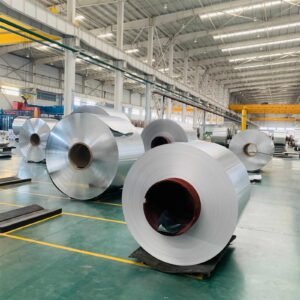
In conventional production, cast slabs are reheated and passed through heavy rolling mills.
Large rollers progressively reduce the metal thickness, typically producing aluminum strip several millimeters thick.
Hot rolling improves dimensional uniformity and prepares the material for subsequent cold rolling.
At this stage, manufacturers carefully control temperature, rolling force, strip thickness, and surface condition. These parameters influence the consistency and quality of the material entering the next stage.
Step 5: Cold Rolling
Cold rolling is one of the most important stages in aluminum foil manufacturing.
The aluminum strip passes repeatedly through precision rolling mills, where powerful rollers reduce its thickness without the need for the same high temperatures used during hot rolling.
As the material becomes thinner, manufacturers must control:
- Rolling force and tension
- Strip thickness and width
- Surface finish and cleanliness
- Lubrication and cooling
- Flatness and edge quality
- Potential pinholes and other defects
The metal becomes harder as it undergoes deformation. Depending on the target properties, intermediate annealing may be required to restore ductility and improve workability.
Through multiple rolling passes, the material is reduced to the thickness required for its final application.
Step 6: Double Rolling for Thin Aluminum Foil
When producing very thin aluminum foil, manufacturers commonly roll two layers together during the final passes.
This technique is known as double rolling.
The surfaces touching the polished work rolls become bright, while the surfaces facing each other generally have a matte finish.
After rolling, the two layers are separated into individual foil webs.
This explains why ordinary aluminum foil has one shiny side and one dull side. For conventional household aluminum foil, there is generally no meaningful difference in cooking performance based solely on which side faces the food.
The difference in appearance is primarily a result of the manufacturing process, rather than a difference in the basic composition of the two surfaces.
Step 7: Annealing and Heat Treatment
Annealing involves heating aluminum foil under controlled conditions to modify its mechanical properties.
Depending on the alloy, thickness, and required temper, the treatment can soften the foil, improve flexibility, and reduce residual stresses from rolling.
Manufacturers carefully manage temperature, heating time, cooling conditions, and furnace atmosphere.
Annealing conditions must be appropriate for the particular foil specification. Excessive or insufficient treatment may affect strength, flexibility, surface quality, and subsequent converting performance.
For food-contact products, manufacturers must also control residues and maintain appropriate hygiene throughout finishing and handling.
Step 8: Slitting and Rewinding
Large foil coils are processed into smaller rolls or narrower widths according to customer specifications.
Slitting and rewinding operations determine the finished product’s width, roll diameter, winding quality, and edge condition.
Different customers may require:
- Rollos de papel de aluminio para uso doméstico
- Catering and commercial kitchen rolls
- Aluminum foil for food containers
- Lidding foil for trays and cups
- Foil for flexible packaging laminates
- Industrial foil for insulation and heat exchangers
Accurate slitting and tension control help prevent wrinkles, telescoping, edge damage, and difficulties during downstream processing.
Step 9: Quality Inspection and Packaging
Before shipment, aluminum foil should undergo inspection appropriate to its intended use and specification.
Typical quality-control checks may include:
- Thickness and width measurement
- Visual inspection for surface defects
- Pinholes and barrier integrity
- Tensile strength and elongation
- Roll weight, length, and winding condition
- Surface cleanliness and residue control
- Coating, printing, or lamination performance where applicable
- Food-contact compliance documentation where required
Manufacturers may also conduct application-specific tests, such as container-forming trials, sealing tests, or migration testing.
Finished rolls are then packed to protect them from moisture, contamination, deformation, and damage during storage and international transportation.
A well-controlled manufacturing process helps ensure that aluminum foil performs consistently throughout its intended service life.
3. Key Properties of Aluminum Foil
Aluminum foil is widely used because it combines several useful physical, mechanical, and chemical properties in one lightweight material.
3.1 Excellent Barrier Protection
One of the most important advantages of aluminum foil is its ability to block light, gases, and water vapor when the foil is continuous and free from defects.
This property makes it valuable for protecting products that are sensitive to oxygen, moisture, light, or the loss of aroma.
Applications include:
- Coffee and tea packaging
- Chocolate and confectionery wrappers
- Pharmaceutical blister packaging
- Retort and flexible food packaging
- Dairy product lidding
- Insulation and industrial laminates
Actual package performance depends on foil thickness, pinhole levels, seal integrity, and the performance of the complete packaging structure.
For example, a foil laminate may combine aluminum’s barrier properties with the heat-sealing performance of polymer layers.
3.2 Excellent Thermal Conductivity
Aluminum transfers heat efficiently, making it useful in baking, roasting, food containers, and heat-exchange applications.
In cooking, aluminum foil can help distribute heat through contact with the food or container and can be used to cover dishes to reduce direct exposure to radiant heat.
However, foil does not automatically make cooking faster in every application. Results depend on oven design, food thickness, airflow, moisture, and how the foil is used.
Its thermal conductivity also makes aluminum useful in industrial applications such as heat exchangers and thermal-management components.
3.3 Lightweight but Functional
Aluminum has a relatively low density, allowing manufacturers to produce thin packaging materials with a low material mass.
Lightweight packaging can reduce the amount of material required per unit, although the overall environmental benefit depends on product design, transportation, product protection, and end-of-life treatment.
For food packaging businesses, low weight can also support efficient roll handling and material conversion.
3.4 Flexibility and Formability
Aluminum foil can be bent, folded, wrapped, embossed, and formed into different shapes.
This flexibility allows it to accommodate irregular food products and complex packaging designs.
Depending on alloy, thickness, and temper, aluminum can be converted into semi-rigid trays, compartment containers, lids, and other formed products.
The material’s ability to retain folds is particularly useful for wrapping and covering food.
3.5 Resistance to Light, Oxygen, and Moisture
Aluminum naturally develops a thin oxide layer on its surface. This layer contributes to its corrosion resistance under many normal conditions.
The metal also provides a highly effective physical barrier against light, gases, and moisture.
Nevertheless, aluminum is not universally resistant to every chemical environment. Strongly acidic or alkaline conditions and high concentrations of salt can increase corrosion or metal migration.
This is why application-specific testing and material selection are important for food-contact products.
3.6 Good Low-Temperature Performance
Aluminum foil can be used for many chilled and frozen food applications.
Unlike some materials that become brittle at low temperatures, aluminum generally maintains useful flexibility under typical food-storage conditions.
It is commonly used for wrapping frozen foods, protecting products in cold storage, and manufacturing packaging for frozen meals.
Actual performance still depends on foil thickness, alloy, laminate structure, and handling conditions.
3.7 Recyclability
Aluminum is a valuable recyclable material, and recycling aluminum generally requires substantially less energy than producing primary aluminum from raw materials.
However, recyclability depends on local collection systems and the construction of the final product.
Clean, uncoated aluminum foil may be recyclable where local programs accept it. Very thin foil, food-contaminated foil, and multilayer laminates can be more difficult to recover.
For packaging manufacturers and importers, designing products with end-of-life recovery in mind is an increasingly important consideration.
4. Aluminum Foil and Food Safety: What Should Buyers Know?
For businesses supplying aluminum foil to food manufacturers, food safety is not simply a marketing statement. It is a combination of material suitability, manufacturing controls, intended use, and compliance with the applicable market requirements.
Is aluminum foil safe for normal cooking?
Generally, food-grade aluminum foil is suitable for ordinary baking, roasting, wrapping, and food storage when used as directed.
However, aluminum can migrate into food under certain conditions. The amount depends on factors such as food acidity, salt content, temperature, contact time, and the properties of the packaging material.
Which foods require extra caution?
Extra care is recommended when uncoated aluminum foil comes into direct contact with:
- Tomatoes and tomato-based sauces
- Lemons and other acidic fruits
- Vinegar-based marinades
- Highly salted foods
- Acidic or salty foods held at elevated temperatures for extended periods
For these applications, consider an appropriate alternative or a food-contact coating specifically designed for the intended conditions.
The suitability of a coating must be supported by the relevant material specifications and compliance evidence. A coated product should not automatically be assumed suitable for every food type or temperature.
Does high temperature increase aluminum migration?
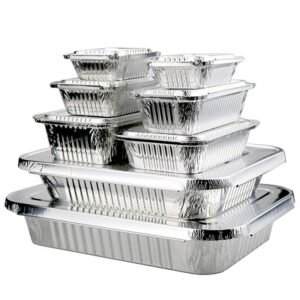
Temperature is one factor that can influence aluminum migration, especially when combined with acidic or salty food and extended contact.
That does not mean all high-temperature cooking with aluminum foil is unsafe. Ordinary oven roasting with suitable foods is different from prolonged heating of acidic or heavily salted dishes in direct contact with uncoated aluminum.
Consumers should follow the product instructions and avoid using foil outside its intended application.
Can aluminum foil be used in a microwave?
Ordinary aluminum foil should not be used to completely wrap food in a microwave oven.
Metal can reflect microwaves and may cause arcing or damage the appliance. Some microwave manufacturers permit limited foil shielding under specific conditions, but users must follow the appliance manual.
Aluminum containers designed for microwave use should only be used when their packaging instructions and the microwave manufacturer’s guidance explicitly permit it.
Does the shiny side need to face the food?
For ordinary household aluminum foil made by double rolling, either side can generally face the food.
The shiny and matte appearances arise from the rolling process. They do not ordinarily indicate different food-contact safety properties.
Specialty coated, printed, or laminated foil products may have a designated contact side, so their instructions should be followed.
5. Common Types of Aluminum Foil and Their Applications
Different aluminum foil products are designed for different performance requirements. Thickness, alloy, temper, coating, and converting method all influence the final application.
| Product type | Main characteristics | Typical applications |
|---|---|---|
| Household aluminum foil | Flexible, easy to fold and wrap | Cooking, covering, food storage |
| Catering aluminum foil | Often supplied in wider or longer rolls | Restaurants, hotels, catering |
| Aluminum container foil | Selected for forming strength and shape retention | Takeaway trays, baking pans, compartment containers |
| Aluminum lidding foil | May include heat-seal coatings or primers | Yogurt cups, ready-meal trays, food containers |
| Flexible packaging foil | Often laminated with other materials | Coffee, confectionery, processed food packaging |
| Pharmaceutical foil | Designed for specific barrier and forming requirements | Blister packs and pharmaceutical packaging |
| Industrial aluminum foil | Specified for thermal, mechanical, or barrier performance | Insulation, heat exchangers, industrial laminates |
Not all products are interchangeable. For example, foil designed for flexible packaging may not have the mechanical properties required for a deep-drawn food tray.
Buyers should match the product specification to the intended application rather than selecting material based on thickness alone.
6. What Determines Aluminum Foil Quality?
When sourcing aluminum foil from an international supplier, buyers should evaluate the complete product specification and the manufacturer’s quality-control system.
Thickness consistency
Consistent thickness supports predictable material usage, converting performance, and barrier integrity.
The required tolerance should be agreed upon in the purchase specification.
Pinholes and surface defects
Pinholes can reduce barrier performance, particularly in very thin foil used for sensitive packaging applications.
Inspection requirements should reflect the final product’s function and applicable industry standards.
Mechanical strength
Tensile strength, elongation, puncture resistance, and formability influence how the foil behaves during wrapping, filling, sealing, and forming.
Different applications require different balances of strength and flexibility.
Surface cleanliness
Rolling residues, contamination, and surface defects can affect downstream coating, printing, lamination, and food-contact suitability.
Manufacturers should use appropriate process controls and cleanliness requirements for the intended application.
Food-contact documentation
For food packaging, buyers should request relevant declarations, material specifications, and supporting test reports as appropriate.
Depending on the destination market and product construction, requirements may include applicable food-contact legislation, migration testing, coating suitability, and traceability.
Compliance should be verified for the actual product and its intended conditions of use rather than assumed from a generic statement that a material is food grade.
Packaging and shipping protection
Aluminum foil is thin and can be damaged by improper handling, moisture, or poor storage.
Export packaging should protect rolls and finished products against crushing, contamination, corrosion-related surface changes, and transportation damage.
7. How to Choose the Right Aluminum Foil Supplier
For importers, wholesalers, and food packaging distributors, choosing a reliable supplier involves more than comparing quotations.
Consider the following factors:
1. Manufacturing capability: Confirm that the supplier can produce the required alloy, thickness, width, temper, and surface finish.
2. Product consistency: Ask about thickness tolerances, inspection methods, defect-control procedures, and batch traceability.
3. Application expertise: Select a supplier familiar with your intended use, whether it is household foil, food containers, lidding, or flexible packaging.
4. Customization: Depending on the supplier’s capabilities, available options may include custom widths, roll lengths, packaging formats, printing, coatings, and laminations.
5. Documentation: Verify the relevant technical data sheets, food-contact declarations, test reports, and export documentation.
6. Delivery and packaging: Review minimum order quantities, production lead times, export packing, and the supplier’s ability to maintain consistent specifications across repeat orders.
A well-defined technical specification can reduce misunderstandings and help buyers compare suppliers on an equivalent basis.
8. The Future of Aluminum Foil in Food Packaging
Aluminum foil continues to play an important role in food preservation, food service, and flexible packaging.
Several factors are shaping its development.
Lightweight material design
Manufacturers continue to optimize foil thickness and alloy selection to balance material efficiency with mechanical strength and barrier performance.
Reducing thickness must be carefully managed to avoid unacceptable increases in defects or losses in package performance.
High-performance packaging structures
Combining aluminum foil with paper, polymers, coatings, and other materials can provide tailored combinations of barrier protection, sealing, printability, and mechanical strength.
The correct structure depends on the product’s shelf-life requirements, filling process, storage conditions, and end-use environment.
Food safety and traceability
As international supply chains become more demanding, buyers increasingly need clear specifications, traceable production records, and evidence that food-contact materials are appropriate for their intended use.
Manufacturers that can provide consistent quality and reliable documentation are better positioned to serve regulated markets.
Sustainability and recycling
Aluminum’s recyclability creates opportunities for material recovery, but packaging design remains important.
Thin foil and multilayer packaging can present collection and separation challenges. Manufacturers, brand owners, and recyclers must consider local waste infrastructure when evaluating environmental performance.
The future of aluminum foil packaging will therefore depend on a combination of technical performance, responsible material use, regulatory compliance, and practical end-of-life solutions.
9. Conclusion: Aluminum Foil Is More Than a Kitchen Essential
Is cooking with aluminum foil safe? In general, food-grade aluminum foil is suitable for many common cooking and packaging applications when used correctly. However, acidic and salty foods, prolonged contact, and inappropriate heating conditions require additional care.
Behind this everyday material is a sophisticated manufacturing process involving alloy selection, melting, casting, rolling, annealing, slitting, and quality inspection. Each stage helps determine the final foil’s thickness, strength, flexibility, surface quality, and barrier performance.
For international buyers, understanding these characteristics makes it easier to select the right aluminum foil for household use, commercial kitchens, food containers, flexible packaging, and industrial applications.
Looking for a reliable aluminum foil packaging solution? Contact our team to discuss your required specifications, product applications, packaging options, and quality documentation. We can help you identify a suitable aluminum foil solution for your target market and supply requirements.